IT — Italiano
  ES — Espanol
  PT — Portuguese
  RU — Russian
  JA — Japanese
  ZH — Chinese
  FR — Français
  DE — Deutsch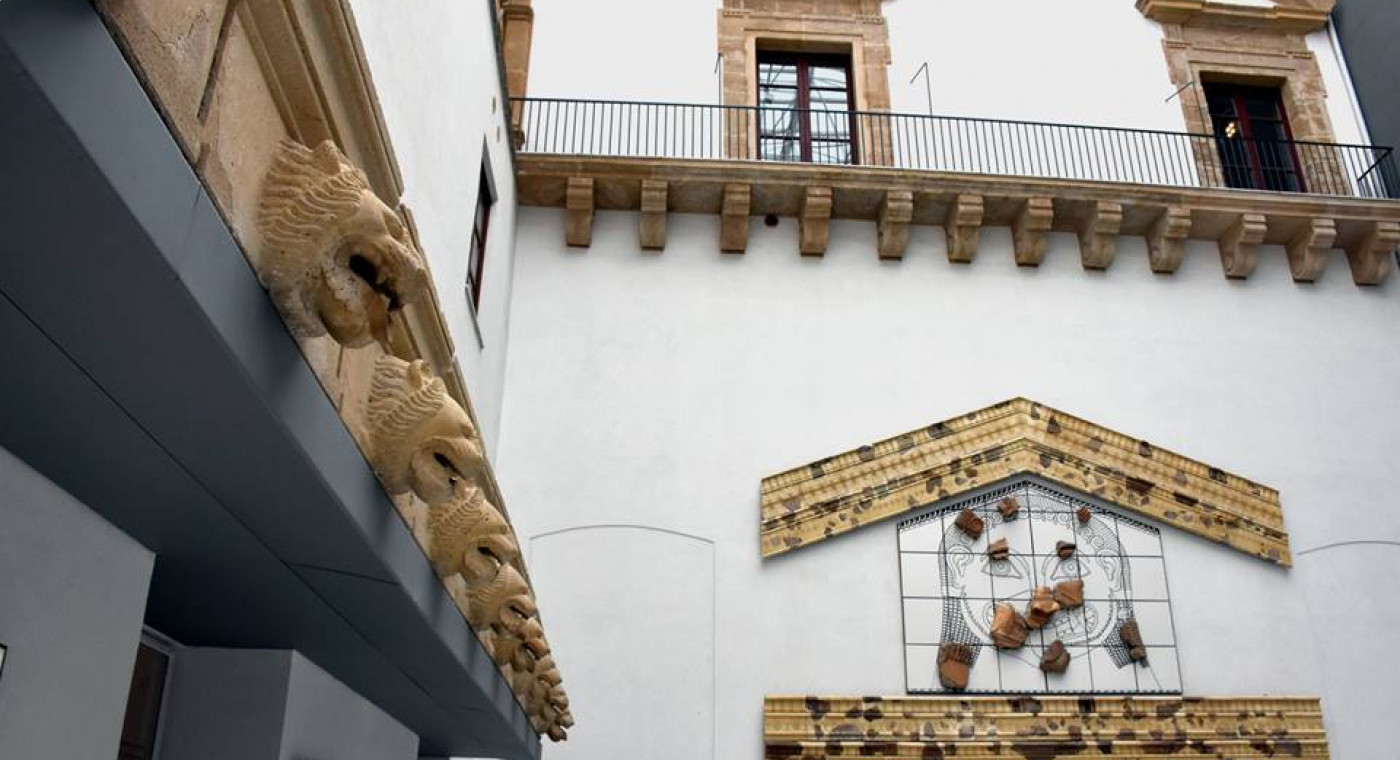
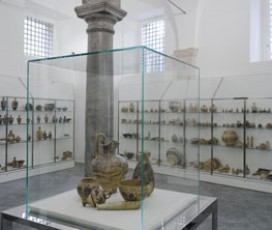
The famous metopes of the temples in Selinunte are the focal point of the Regional Archaeological Museum in Palermo, which also preserves precious artifacts from Pompeii, and one of the most important collections of Etruscan and Punic art in Italy.
OPENING HOURS
Tuesday to Saturday: 9:30 am - 6:30 pm
Sunday: 9:30 am - 1:30 pm
Closed Monday
Ticket Office: Last admission 30 minutes before the closing of the museum.
The Museum
The Archaeological Museum of Palermo, which was once national museum, is dedicated today to Antonino Salinas, the great archaeologist and numismatist from Palermo. Founded in 1814 as a museum of the university, where some of the main archaeological and historical-artistic collections of Sicily were brought together, it became National Museum in 1860. From that moment, other important collections and materials from various sites around Italy were gathered here.
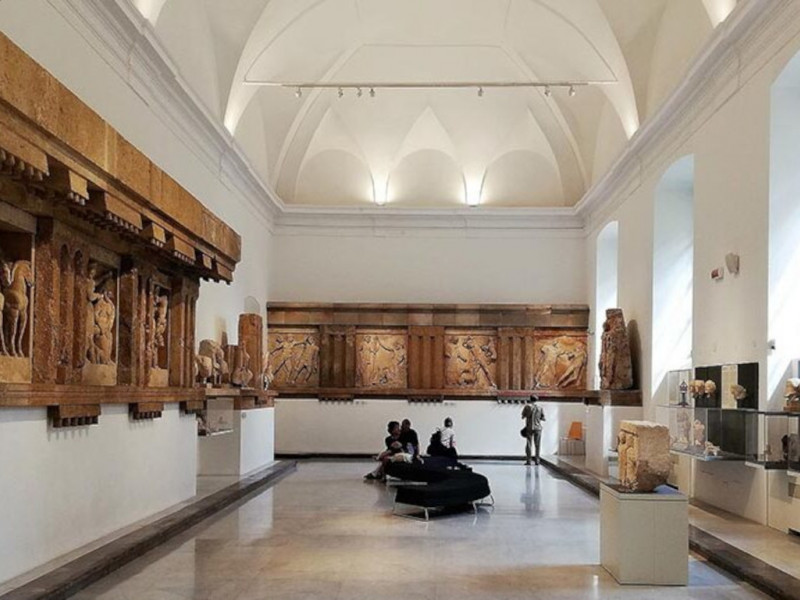
The focal point of the exhibition remains the hall that, for over 150 years, has been hosting the famous metopes of the temples in Selinunte, defined the most important sculptural complex of Western Greek art. It is now completed by the contextual exposition of new fragments and by a substantial selection of architectural terracotta that still retain the original, vibrant polychromy. They were discovered in 1823 by British architects Angell and Harris, who attempted to transfer them to the UK.
The Bourbon Kings gave the museum several valuable artifacts from Pompeii and Torre del Greco, while excavations and purchases by the Commission of Antiquities and Fine Arts helped to increase the collections. In 1865, for example, thanks to the efforts of Michele Amari, the collection of Etruscan antiquities was acquired. This collection - which is one of the most important in Italy - was put together by Pietro Bonci Casuccini with items found on his land in the territory of Chiusi (province of Siena).
Among the most important acquisitions, the so-called "Stone of Palermo", with hieroglyphic inscriptions bearing the annals of the first five Egyptian dynasties (3238-2990 BC) has been of capital importance for the reconstruction of the history of the Old Kingdom of Egypt.
After the unification of Italy, members of the Savoy dynasty also donated several items to the museum, including the magnificent bronze ram from Syracuse. But it is above all the influx of materials from excavations and purchases made in Sicily that determined the importance and the central role of the museum, in particular under the direction of Antonino Salinas (1873-1914), who was firmly convinced that the institute should illustrate Sicilian history from prehistoric times to the contemporary age.
The post-war years were fundamental for the history of the institute which became exclusively archaeological museum from that moment by assigning its historical art and ethno-anthropological collections to the formation of other city museum institutions.
OPENING HOURS
Tuesday to Saturday: 9:30 am - 6:30 pm
Sunday: 9:30 am - 1:30 pm
Closed Monday
Ticket Office: Last admission 30 minutes before the closing of the museum.
Prices
Cancellation Policy
Before You Book
IMPORTANT NOTE: The time you select on the order form is your preferred time. The closest available time, which can be anytime during opening hours on the selected date, will be automatically confirmed if your preferred time is no longer available.
Sicily